
Studio Ghibli’s visual style is instantly recognizable across the world. From the lush green landscapes of My Neighbor Totoro to the dreamlike skies of Spirited Away and the hand-painted warmth of Howl’s Moving Castle, Ghibli imagery evokes nostalgia, emotion, and timeless beauty. With the rise of AI image generation, designers, artists, and marketers are now exploring how to recreate Studio Ghibli-style visuals using expert techniques—without copying or infringing on original artwork.
This guide explains Studio Ghibli-style image generation techniques, artistic principles, prompt strategies, color theory, and composition secrets that professionals use to achieve that soft, magical aesthetic.
Understanding the Studio Ghibli Aesthetic
Before generating Ghibli-style images, it’s important to understand what defines the style. Studio Ghibli is not just about anime—it’s about emotion, nature, and storytelling through visuals.
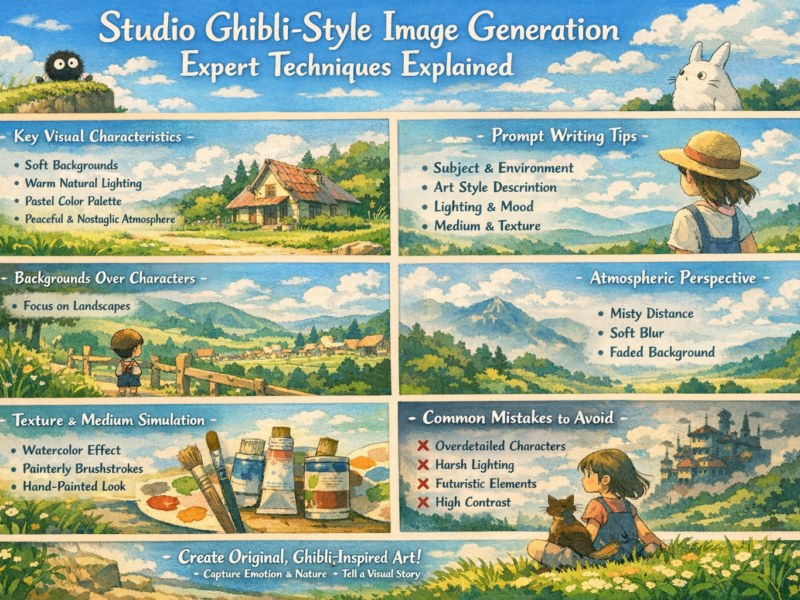
Key Visual Characteristics
- Soft, hand-painted backgrounds
- Natural lighting with warm tones
- Pastel and watercolor-inspired colors
- Detailed environments, simple characters
- Peaceful, nostalgic atmosphere
- Strong connection to nature and rural life
Ghibli visuals feel alive yet calm, magical yet grounded in reality. Every frame looks like a painting rather than a digital illustration.
Why Studio Ghibli-Style Images Are Popular in AI Art
The Ghibli aesthetic has become one of the most requested styles in AI image generation for several reasons:
- High emotional impact
- Timeless visual appeal
- Perfect for storytelling content
- Ideal for children’s brands, fantasy, and travel themes
- Strong engagement on social media
Creators use this style for:
- Book illustrations
- YouTube thumbnails
- Brand storytelling visuals
- Concept art
- Wallpapers and posters
Core Artistic Principles Behind Ghibli-Style Image Generation
- Backgrounds Over Characters
In Ghibli-style art, environments take center stage. Characters are often small compared to the world around them.
Expert Tip:
When generating images, prioritize landscape details—fields, skies, forests, villages—over close-up portraits.
- Soft Natural Lighting
Ghibli lighting feels organic. It often mimics:
- Early morning sunlight
- Golden hour glow
- Overcast afternoon skies
Avoid harsh shadows or dramatic contrast.
Prompt technique:
Use phrases like soft sunlight, diffused lighting, warm ambient light, or gentle glow.
- Color Palette Mastery
Studio Ghibli colors are:
- Muted but rich
- Pastel-inspired
- Balanced between warm and cool tones
Greens, blues, creams, and earthy browns dominate.
Avoid:
Neon colors, oversaturation, or heavy digital gradients.
Expert Prompt Engineering for Ghibli-Style Images
Prompt writing is the most critical skill in AI image generation.
Structure of an Expert Prompt
- Subject – What is in the image
- Environment – Nature or setting
- Art Style Description – Without copying names directly
- Lighting & Mood
- Medium & Texture
Example Prompt (Professional Style)
A peaceful countryside village surrounded by rolling green hills, tall grass swaying in the wind, soft watercolor textures, hand-painted anime background style, warm sunlight, pastel color palette, cinematic wide angle, calm and nostalgic atmosphere, highly detailed environment
This avoids copyrighted references while still capturing the Ghibli-like feel.
Advanced Techniques Used by Experts
- Atmospheric Perspective
Ghibli scenes often show distance through:
- Lighter colors in the background
- Soft blur in far landscapes
- Gentle fog or haze
This adds depth and realism.
Prompt keywords:
misty distance, soft depth, faded background layers
- Environmental Storytelling
Every Ghibli scene tells a story even without characters.
Examples:
- An empty train station at sunset
- A quiet road with wildflowers
- A small house with smoke rising from the chimney
These details spark imagination.
- Minimal Character Complexity
Characters in Ghibli-style images are:
- Simple facial features
- Rounded shapes
- Natural poses
Avoid hyper-realistic faces or exaggerated anime eyes.
Composition Secrets from Studio Ghibli Films

Rule of Negative Space
Ghibli compositions leave room to breathe. Open skies and empty fields create calmness.
Natural Framing
Trees, windows, or hills frame the subject naturally.
Low or Wide Camera Angles
These angles make environments feel expansive and cinematic.
Texture & Medium Simulation
To achieve authenticity, experts simulate traditional art materials.
Common Mediums to Mention
- Watercolor
- Gouache
- Soft oil paint
- Hand-painted animation cel
Prompt additions:
traditional animation background, painterly texture, visible brush strokes
Common Mistakes to Avoid
Many beginners fail to capture the true Ghibli-style feel because of these mistakes:
❌ Over-detailing characters
❌ High contrast lighting
❌ Cyberpunk or futuristic elements
❌ Dark or aggressive moods
❌ Overuse of AI sharpening
Studio Ghibli visuals are gentle, not dramatic.
Post-Processing for Ghibli-Style Images
After image generation, professionals enhance visuals using light editing.
Recommended Adjustments
- Slightly reduce contrast
- Add warmth
- Lower saturation by 5–10%
- Apply subtle film grain
- Soft blur on edges
This step makes AI art feel more hand-crafted.
Using Ghibli-Style Images for Branding & Marketing
Businesses and creators use this style for:
- Children’s products
- Travel promotions
- Storytelling brands
- Educational content
- Book covers and illustrations
The emotional pull increases engagement and trust.
Ethical & Creative Best Practices
When generating Ghibli-style images:
✔ Do not copy exact characters
✔ Avoid referencing specific copyrighted scenes
✔ Focus on style, mood, and technique
✔ Create original compositions
This ensures originality and creative integrity.
Future of Ghibli-Inspired AI Art
As AI evolves, Ghibli-style image generation will become:
- More painterly
- More emotionally intelligent
- Better at lighting and atmosphere
Artists who master prompt engineering + artistic fundamentals will lead the creative future.
Final Thoughts
Studio Ghibli-style image generation is not about imitation—it’s about capturing emotion, nature, and simplicity. By understanding lighting, color, composition, and storytelling, creators can generate stunning visuals that feel magical and timeless.
Master these expert techniques, refine your prompts, and focus on mood rather than perfection. The result will be AI-generated images that feel warm, nostalgic, and deeply human—just like the spirit of Studio Ghibli.